Commercial Waste in Welwyn
Commercial waste in Welwyn needs a practical, compliant approach that keeps day-to-day operations moving while waste is removed in a controlled way. We provide a straightforward service for businesses that want reliable collection of mixed commercial waste, recyclable materials and bulky items without turning waste handling into a distraction. The aim is simple: remove what your site no longer needs, separate materials sensibly where possible, and leave the premises ready for normal use.
Our business waste removal service suits offices, shops, workshops, hospitality premises and other commercial settings that generate recurring or one-off waste streams. Where items are more specific, we can also deal with general clearances such as office clearance work for desks, chairs and storage items, or furniture disposal when fixtures and loose items need to be removed carefully. Each visit is arranged around the type of waste, the access available and the volume to be collected.
Before requesting a quotation, it helps to note the approximate amount of waste, the type of materials involved and whether anything is awkward to move. That information allows us to match the collection to the job rather than overcomplicate it. If you are comparing options, pricing and quotes gives a useful starting point, while a clear request for a quotation remains the quickest way to outline what needs removing.
Regular and one-off commercial collections
Many businesses need waste taken away as a scheduled task, while others only need help when storage fills up or a refurbishment creates a temporary backlog. Our commercial collections are designed to handle both. That may mean bagged waste, broken office contents, packaging, redundant stock, display items or mixed general rubbish that has accumulated during normal trading. The focus is on keeping disposal organised and on avoiding unnecessary disruption to staff or customers.
Where the waste is mainly generated inside an office environment, the job may overlap with office clearance or involve smaller-scale business waste removal visits. In other settings, waste may be linked to a site tidy-up, a stockroom reset or the removal of old fittings before maintenance work starts. We can discuss the most suitable approach once the material type and access arrangements are known, so the collection reflects the practical realities of the premises rather than a generic service template.
Typical jobs can include:
- bagged and boxed waste from offices, shops and shared workspaces
- mixed commercial rubbish gathered during a tidy-up or move
- redundant furniture and fit-out items no longer needed on site
- single-item or grouped collections where loading space is limited
Office waste and workplace clearances

Office waste often involves more than ordinary rubbish. Desks, chairs, filing cabinets, shelving, monitors, storage units and packaging can all build up at different points in a workplace. We handle clearances in a way that keeps the items moving in an orderly sequence, especially where corridors, lifts or shared entrances need to remain usable. The emphasis is on removing what is no longer required without creating extra mess for the team that stays behind.
For businesses replacing furniture or reconfiguring work areas, a combination of office clearance and furniture clearance can be a sensible option. This helps when a premises contains a mix of loose office contents and larger items that need to be carried out with care. We also support related tasks such as clearing meeting rooms, back offices and storage areas where the contents are no longer needed but still have to be lifted and sorted properly.
Useful details to share when asking for a quote include the floor level, whether there is lift access, any narrow routes or restrictions, and the approximate number of items. A concise description is usually enough. If you are ready to move forward, book online is available for straightforward jobs, or you can make a plain-text enquiry if you would rather discuss the collection first.
Furniture, fixtures and bulky items
Commercial premises often generate bulky waste that is awkward to move even when the volume is not especially high. Reception seating, desks, shelving, cabinets, tables and display units all need careful handling, particularly in buildings with shared access or limited storage space. Our service is aimed at removing these items efficiently and with enough attention to the route out of the premises to avoid avoidable damage.
Where furniture is the main issue, furniture disposal and furniture clearance can be used for collections that are centred on larger items rather than mixed rubbish. For items that are no longer wanted but are still structurally intact, the practical question is usually whether they can be grouped together for one collection or need to be taken in stages. That is often clearer once we know the item types and the access available on the day.
Good planning keeps bulky waste simpler. If you are arranging a clearance for several rooms or departments, identify the items that must go, the items that stay and any contents that need to be separated before collection. That makes it easier to organise the removal route and to keep the work moving cleanly. It also helps to mention anything fragile, heavy or fixed in place so the quotation reflects the actual job.
Mixed rubbish, bagged waste and general site tidy-ups
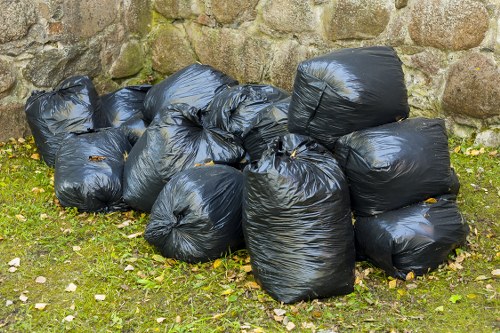
Not every commercial waste job is made up of large items. Many premises need mixed rubbish taken away after an internal move, a storage reset or a period of seasonal activity. Bagged waste, cardboard, packaging, outdated promotional materials and general clutter can all mount up in a way that affects the use of storage rooms, back corridors and service areas. We deal with these collections as practical tidy-up jobs rather than as one-size-fits-all removals.
For businesses with varied waste types, a combined collection may be more efficient than splitting the work into separate visits. If you have a mixture of office contents, furniture and lighter refuse, it can be useful to combine business waste removal with a more specific service such as furniture disposal. That approach keeps the job focused and lets us plan the load around the actual material on site rather than assuming everything falls into one category.
The most useful information is often the simplest: what needs removing, what must remain, and whether the site has any loading constraints. If you are unsure how to describe the waste, a short written list is enough to start the conversation. Clarity at this stage helps keep the quotation relevant and avoids unnecessary revisions later.
Responsible handling and sorting of commercial waste
Commercial waste is rarely just a matter of lifting and leaving. Different materials may need separate handling so they can be directed to the appropriate disposal or recovery route. Cardboard, reusable office items, mixed rubbish and bulky furniture do not all belong in the same approach, and a sensible collection process takes that into account. We keep the work practical by dealing with the waste in a way that suits both the material and the premises.
Our approach is supported by related pages on recycling and sustainability and what can go in a skip, which can help when you want to understand how different materials are usually treated. Where a site produces restricted items, separate arrangements may be needed, and those are better discussed in advance than left until collection day. That is particularly relevant if the waste includes anything that must be handled under specific rules or kept away from the main load.
We recommend listing any unusual items separately, especially if you think they might need a different disposal route from the rest of the load. That can include fragile equipment, heavier fittings, or items with mixed materials. A clear description helps keep the collection practical, reduces wasted time on site and makes the quotation more accurate from the outset.
Special items and more specific waste types
Some commercial properties generate items that sit outside a basic mixed-waste collection. Examples include fridges, appliances, confidential paper waste, and awkward materials that need a different disposal route from standard office rubbish. We keep these collections as specific as possible so the right service is used for the right item. That matters because the handling method should suit the object, its condition and the setting it comes from.
Where relevant, fridge and appliance removal can cover electrical items that are too bulky for ordinary disposal, while confidential shredding is the better route for papers and documents that should not be placed with general waste. If a load includes items that are difficult, restricted or best kept separate, it is sensible to mention them early so the collection can be planned correctly and no part of the job is treated too casually.
Some sites also need hazardous waste disposal, but that is a distinct category and should only be arranged where the material genuinely falls into that group. If you are unsure whether an item belongs in ordinary commercial waste or needs a dedicated service, ask before the visit rather than guessing. A careful description is usually enough to steer the job in the right direction.
About Welwyn
Welwyn is a Hertfordshire village and civil parish with a long-established centre shaped by its position on the River Mimram and the route of the old Great North Road. The older settlement, often referred to as Welwyn Village, developed around the river crossing and retains a compact historic core with a mix of traditional buildings, narrow streets and local shops. The area sits within a landscape of chalk valleys and gently rising ground, which gives the village a more intimate feel than some of the larger nearby towns. Its name is closely associated with Welwyn Garden City to the south, but the village itself has a distinct character and history. The Church of St Mary the Virgin is one of the most notable landmarks, with origins that reflect the long continuity of settlement in the parish. Nearby, the Welwyn Viaduct is an important Victorian structure carrying the East Coast Main Line across the valley, and it remains a prominent feature in views around the village. Walks along the Mimram, open green spaces and the surrounding Hertfordshire countryside add to the settlement’s appeal, while the High Street area provides a focus for local activity. Over time, Welwyn has balanced its historical fabric with later housing and modern services, so the village today combines heritage, transport links and a recognisable local identity within the wider district.
Commercial waste for moving, refits and changing premises
Commercial waste is often generated during transitions: a move to new premises, a refit, a change in storage layout or the removal of old equipment before upgrades begin. These jobs benefit from clear sequencing because the waste is usually tied to items that still sit around the working environment. We can deal with the redundant materials once you have identified what is staying and what is going, so the site can move towards the next stage without clutter delaying the process.
In some cases, a move may involve a full home clearance style of approach for a small business premises with domestic-type contents, while larger offices may need a more targeted office clearance or mixed business waste removal service. The correct choice depends on the contents, the site layout and the scale of the removal. We can help shape that decision by looking at the item types first rather than forcing everything into one label.
If you are preparing for a change of premises, make a short list of the items that must be removed, note any access restrictions and decide whether there are fixed pieces that need to stay in place. Then request a quotation when you are ready and we can help set the collection around the actual job. That keeps the process clear and gives you a better basis for planning the next step.
Choosing the right collection for your site
Commercial waste jobs vary because premises vary. A retail unit, a shared office, a workshop and a storage room all produce different types of waste and pose different practical questions. Some sites need an occasional clearance, while others benefit from repeated visits when stock, packaging or redundant equipment starts to build up. A sensible service should reflect those differences rather than applying the same method to every business.
Where the priority is simply to empty a room or remove mixed contents in one go, a broader waste removal service may be appropriate. Where the main issue is furniture or workplace fittings, the more specific pages on furniture clearance and office clearance are useful starting points. For a clear overview of costs and scope, pricing and quotes can help you judge what to include when you ask for a quotation.
Our aim is to keep the service precise enough to be useful but flexible enough to handle the practical realities of commercial premises. Whether the job involves a few bulky items or a fuller clearance, the quotation should match what is actually on site. If that sounds like what you need, send the details now and ask for a quotation.